
Here’s a situation I run into more than I’d like: I open a shared folder in Drive and still see files I deleted days ago, while everyone else sees the right list. My account is fine. My browser is just holding on to an old copy of Drive.
In this tutorial, I’ll show you how to clear cache in Google Drive on the web, on Android, on iPhone and in Drive for desktop. I’ll also share the order Google itself suggests and the one mistake that can actually cost you files.
Know which cache you are clearing before you click anything
Why: Drive on the web has no “clear cache” button. The cache lives in your browser, in the phone app, or in the Drive for desktop app, and each one is cleared in a different place.
How: match the cache to the problem. Stale folders or a page that won’t load point to the browser. A phone app that crashes points to the app. A computer that’s out of space points to Drive for desktop. If Drive is just sluggish, my list of reasons Google Drive gets slow may save you the trouble.
Clear Chrome’s site data for Drive instead of your whole history
Why: clearing everything signs you out of every site and makes some pages load slower for a while. Google says both of those things happen after you delete browsing data.
How: in Chrome on a computer, click More (the three dots), then Delete browsing data. Pick a time range, like Last hour or All time, check Cookies and other site data plus Cached images and files, and click Delete data. Typing “Delete browsing data” in the address bar opens the same screen.
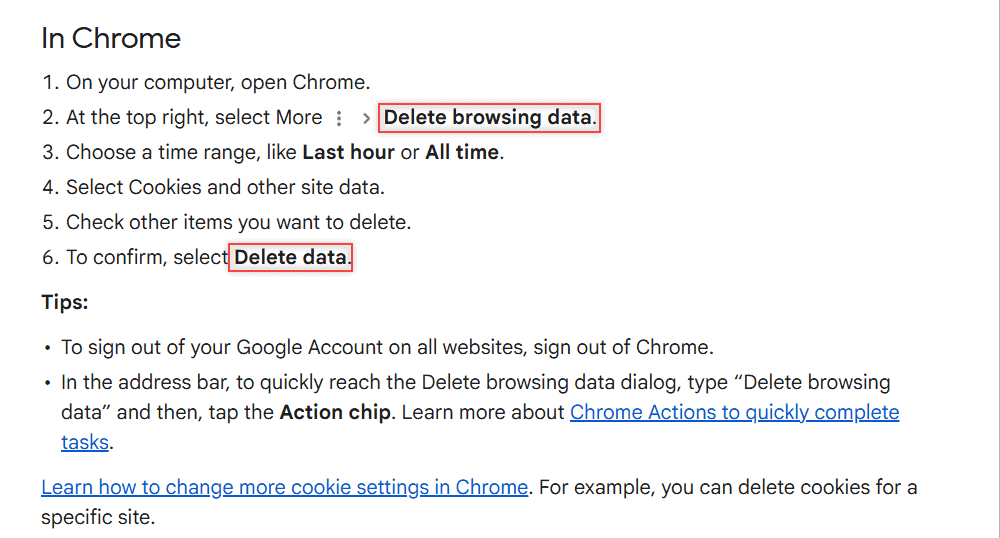
If you only want Drive reset, Google also lets you delete cookies for one site from Chrome’s cookie settings. Then reload Drive and sign in again. That usually clears stale file lists in under a minute, and it often clears a failed server error in Drive too.
Follow Google’s order: browser cache first, then Offline off and on
Why: this is the part most guides skip. Google’s own “Fix common issues” page lists clearing your browser cache as one step, and turning offline access off and back on as a later step. Offline mode keeps its own local copy of your recent files, so a stale copy can survive a cache clear.
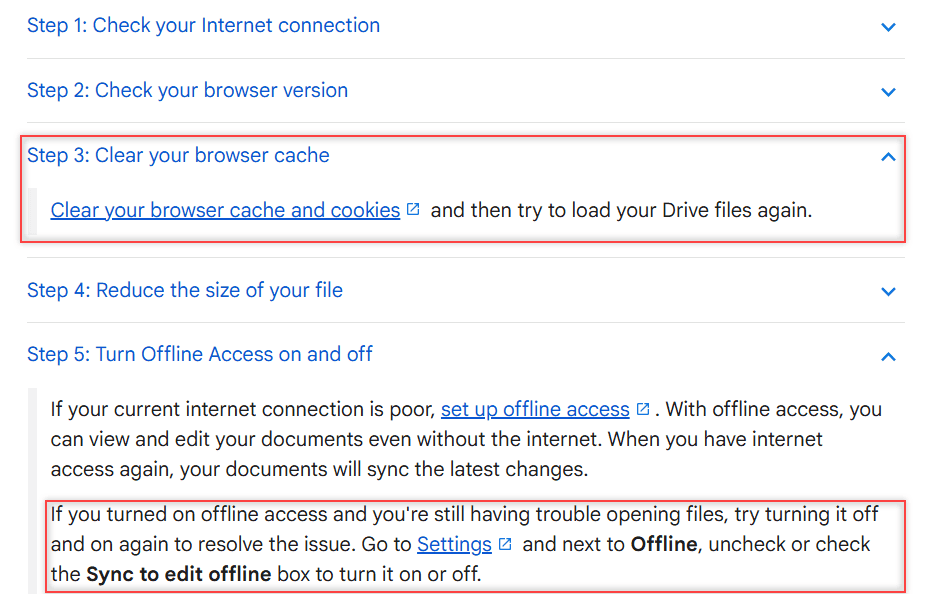
How: in Drive on the web, click the gear icon, then Settings. On the General tab, uncheck the Offline box, wait a moment, and check it again.
Heads up: Google’s help still calls it “Sync to edit offline”, but the live setting now reads “Create, open and edit your recent Google Docs, Sheets, and Slides files on this device while offline.”
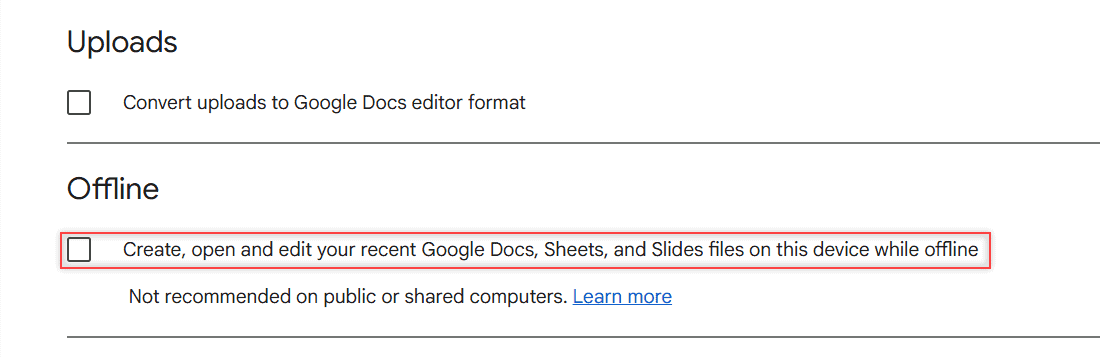
Google labels it “Not recommended on public or shared computers”, so leave it off on a shared machine. If Drive also keeps saying you are offline, this toggle is worth a try.
On Android, clear the app cache but leave storage alone
Why: Clear cache only removes temporary files. Clear storage permanently deletes all of the app’s data, which Google warns about plainly.
How: open your phone’s Settings, tap Apps, choose Drive (tap See all apps if it’s hidden), then Storage & cache, and tap Clear cache. Menu names vary by phone maker, and older phones say Apps & notifications. Drive may open a little slower the first time afterward, which is normal.
On iPhone, offload or delete the Drive app to reset it
Why: Google’s Drive help lists no cache setting for the iPhone app, and iOS has no clear cache button either. The old version of this post cleared Safari’s history, but that doesn’t touch the Drive app at all.
How: open Settings, tap General, then iPhone Storage, and tap Drive. Apple gives you two choices. Offload App frees the space the app uses but keeps its documents and data. Delete App removes the app and its related data.
Make sure your uploads have finished before you delete, then reinstall Drive from the App Store and sign back in. If you only want a fresh session, you can sign out of Google Drive on iPhone first and see if that’s enough.
Let Drive for desktop finish syncing before you touch its cache
Why: Drive for desktop keeps a content_cache folder for each signed-in account. Files that haven’t uploaded yet can live there, so wiping it at the wrong moment can lose work. Google also warns that cleaner apps like CCleaner can edit Drive for desktop’s data and cause errors and data loss.
How: open Drive for desktop and wait for “Your files are up to date”. Pause syncing if you want things to stay still, then quit from the settings menu and reopen it. That restart clears up most problems.
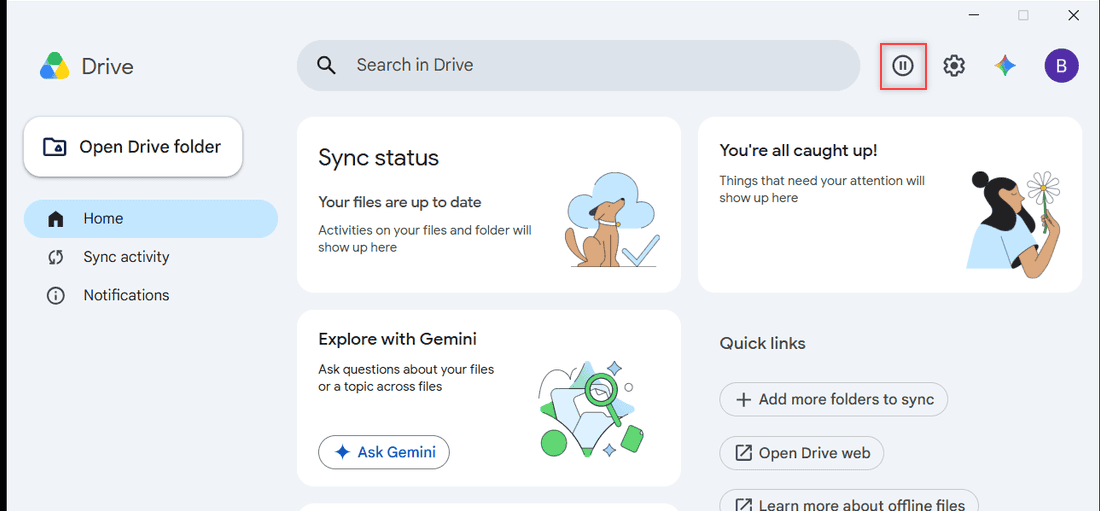
If you need a full reset, use Disconnect account from the profile menu instead of deleting folders by hand. Copy anything in the Lost & Found folder first, because disconnecting removes it along with offline files.
My guide on how to turn off Google Drive sync shows where these menus live, and if something vanishes, start with finding missing Drive files.
Run this checklist before you clear anything
- Check that uploads and syncs show as finished.
- Copy anything in Drive for desktop’s Lost & Found folder.
- Clear only Drive’s site data if you don’t want to sign out everywhere.
- Turn Offline off and on after clearing the browser cache.
- On Android, tap Clear cache, never Clear storage, unless you’re starting over.
A few more fixes I keep handy:
- Drive storage full with no files
- Chrome extensions worth testing
- when Drive downloads fail
- Drive for desktop that will not open
Questions I get about this
Will clearing the cache delete my Google Drive files?
No. Your files live in your Google account, not in the cache. The only risk is a file that hasn’t finished uploading from Drive for desktop or the phone app, so wait for syncing to finish first.
Is there a clear cache button inside Google Drive?
Not on the web. You clear the browser’s cache and cookies, then reload Drive, which is step 3 on Google Drive Help: Fix common issues.
What is content_cache in Google Drive?
It’s the folder where Drive for desktop keeps local copies of your files for each signed-in account. Don’t delete it by hand or with cleaner apps; quit the app or use Disconnect account instead.
Do I have to sign in again after clearing the cache?
If you deleted cookies, yes. Google notes you may be signed out of sites and some pages may load slower the first time.

I am Carissa Gudinoa, a technology buff, and Office online and Apple expert with over 9 years of experience. I am passionate about helping others get the most out of their Apple devices. I have written extensively about Apple products and technologies. I am committed to providing my clients with the best possible service and am always up-to-date on the latest Apple products and features. I also write extensively on other software available for use at minimal cost or free. This includes Word Online, Outlook Online, Excel Online, and other Office online programs… Check out more.