
Drive was working a minute ago, and now it tells you it can’t reach Google. Depending on where you look, you’ll see a message like one of these:
You are offline
Trying to connect
In this tutorial, I’ll show you why Google Drive keeps going offline and how to fix it in a browser, in Drive for desktop, and in the phone app. The fix that works most often is simple: check the connection, then the Status Dashboard, before you change any settings.
Why Drive says you’re offline
Drive shows an offline message when it can’t talk to Google’s servers. Most of the time the cause is on your side: a flaky network, a browser extension, security software, or a proxy. Now and then Google itself has an outage.
There’s a second meaning, too. Drive also has an offline mode that lets you keep working on recent Docs, Sheets, and Slides without internet. If that mode is off, you’ll lose access the moment the Wi-Fi drops.
If Drive isn’t offline but just crawls, my guide on why Google Drive is so slow is the better place to start.
Fix 1: Check your connection and try another network
This is Google’s first step for the “Trying to connect” message, and it’s the one that solves it for me most often. You’ll know it applies if other websites are slow or fail too.
- Open a couple of other websites in a new tab.
- Switch networks: from Wi-Fi to your phone’s hotspot, or the other way around.
- Restart your router if every site is struggling.
- Reload Drive and see whether the message clears.
If uploads were in progress when the connection dropped, they may sit in a queue. My post on Google Drive waiting to upload covers that part.
Fix 2: Check the Google Workspace Status Dashboard
If your internet is fine, look at Google’s side next. The Google Workspace Status Dashboard lists known problems with Drive, Docs, Gmail, and the rest. Google says a red dot next to a product means there’s a known issue.
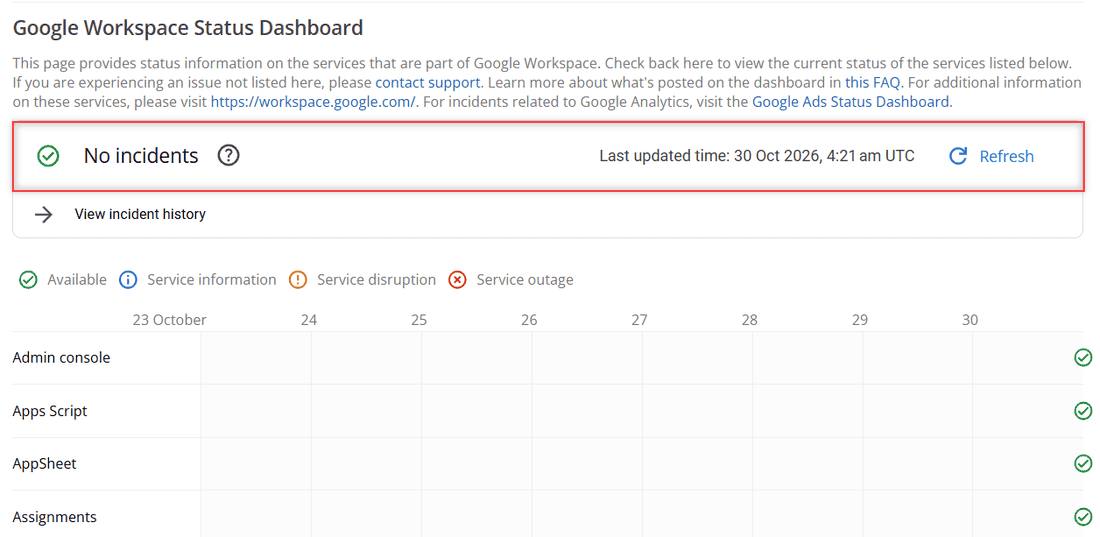
When I checked on October 30, 2026, it showed no incidents. If you see a red dot next to Google Drive, there’s nothing to fix on your end. Wait it out and try again later.
Fix 3: Turn on offline access in Drive settings
If Drive goes offline whenever your Wi-Fi blinks, turn on offline access so your recent files still open. Google’s requirements are short: use Chrome or Microsoft Edge, install the Google Docs Offline extension, and don’t use private browsing.
- Open drive.google.com in Chrome or Edge, signed in to the right account.
- Click the gear icon at the top right, then Settings.
- Under Offline, check Create, open and edit your recent Google Docs, Sheets, and Slides files on this device while offline.
- Click Done.
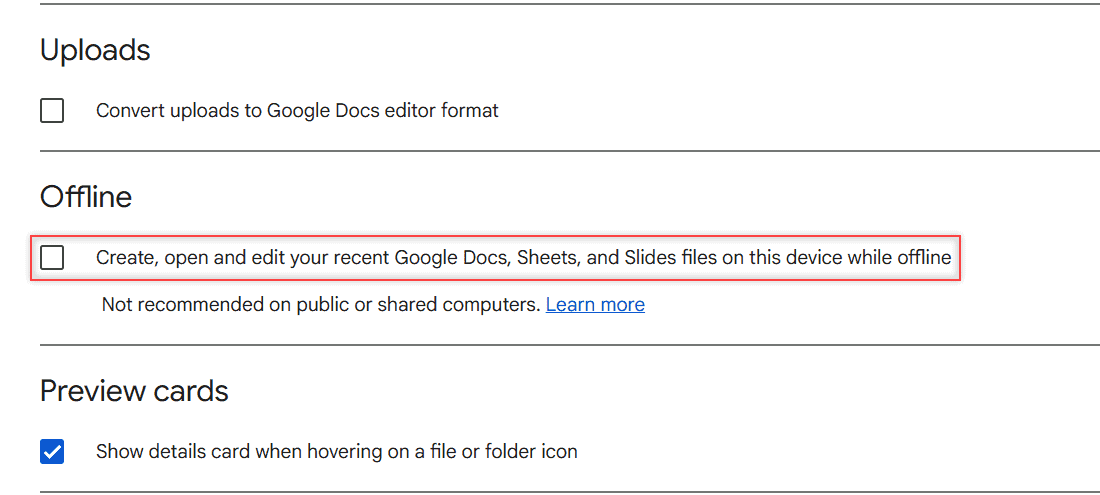
Some Google help pages still call this box “Sync to edit offline.” It’s the same setting with a new label. Notice the warning under it, too: Drive says it’s not recommended on public or shared computers.
If offline files still won’t open, Google suggests turning the setting off, then on again.
Check that the file itself is available offline
The setting covers recent files. For a file you’ll need on a plane or a bad connection, mark it yourself. In a Google Doc, open File and choose Make available offline.
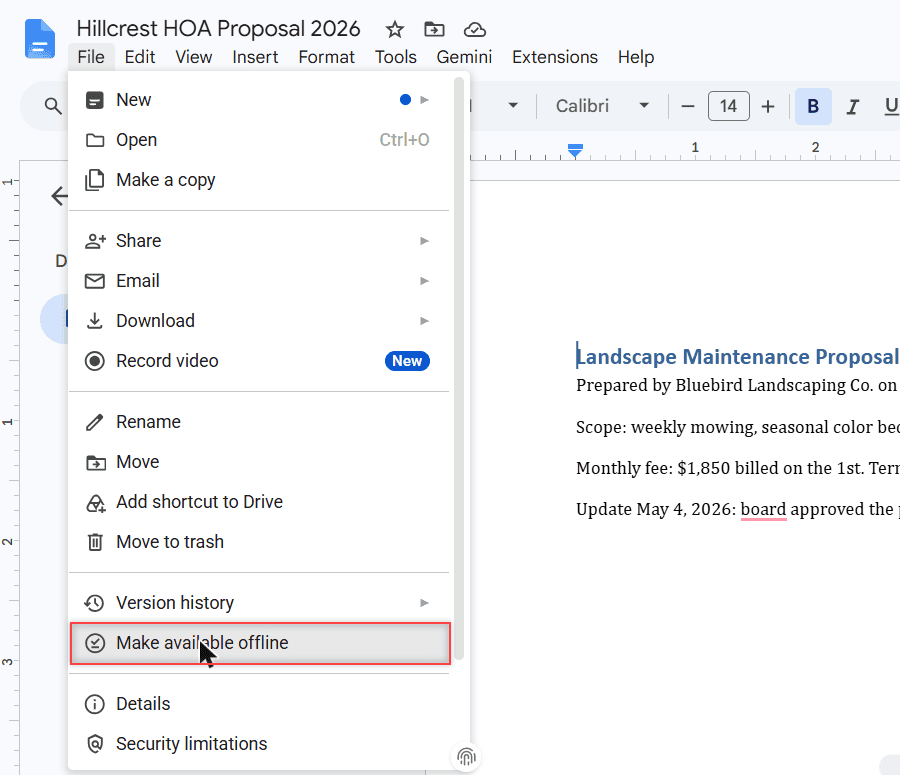
In Drive, you can also right-click a Docs, Sheets, or Slides file and pick the same option. When you’re back online, your changes sync on their own. If you edit a document in Google Drive offline a lot, mark the files before you travel.
Fix 4: Clear your browser cache and cookies
Old cached data can keep Drive stuck in a bad state after the connection comes back. Google lists clearing the cache and cookies as a standard fix, and it also says Drive needs cookies and JavaScript turned on.
- In Chrome, open the three-dot menu and choose Delete browsing data.
- Select Cookies and other site data and Cached images and files.
- Pick a time range, click Delete data, then sign in to Drive again.
Signing out and back in is part of this fix, and that alone clears up stale sessions for me. The step-by-step version for every browser is in my guide to clear cache in Google Drive.
Fix 5: Turn off extensions and try another browser
Google says virus scanners and adblockers can block Google Workspace. Browser extensions are the usual culprit when Drive works in one browser and not another.
- Open Drive in an incognito window. Extensions are usually off there, so if Drive works, an extension is the cause.
- Turn your extensions off one at a time until Drive behaves.
- In Firefox, Google suggests turning off Enhanced Tracking Protection for Drive if files don’t display right.
- Keep your browser updated: Drive supports the two most recent versions of major browsers, and Google recommends Chrome.
Remember that offline mode doesn’t work in private browsing, so go back to a normal window afterward. My list of Chrome extensions for Google Drive is a good place to pick ones that play nicely.
Fix 6: Resume or restart Drive for desktop
If Drive for desktop keeps disconnecting on Windows or a Mac, check whether syncing is simply paused. Google says you can pause or resume syncing at any time, so it’s easy to leave it paused by accident.
- Click the Drive for desktop icon in the system tray (Windows) or the menu bar (Mac).
- Look at the status at the top of the window.
- If it says Paused, click the Resume (play) button.
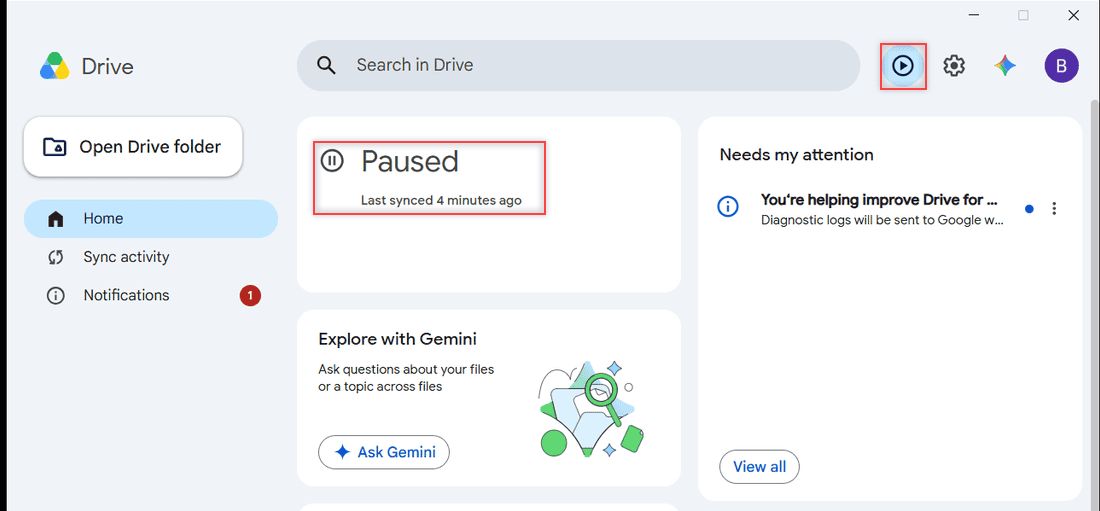
If it isn’t paused, quit and reopen it. Click the gear icon in the Drive for desktop window, choose Quit, then open the app again from the Start menu or Applications.
Keep in mind that streamed files you haven’t marked offline need an internet connection. If the app won’t open at all, see what to do when Drive for desktop won’t launch.
Fix 7: Check firewall, proxy, and antivirus settings
Google says certain firewall, proxy, and network settings can interfere with Drive for desktop. A proxy that blocks the app can also cause the “Can’t load account” problem.
- Allow Drive for desktop through your firewall.
- Ask your IT team whether a proxy or VPN blocks Google Drive.
- Exclude Drive for desktop from your antivirus scan instead of turning protection off.
That last point replaces an old tip I used to give. Don’t switch off Windows Security to test Drive. An exclusion fixes the conflict and keeps your computer protected.
Fix 8: Make files available offline on your phone
On a phone, Drive needs a connection to open most files. If your signal comes and goes, save the important ones for offline use.
- Android: open the Drive app, tap More next to the file, then tap Make available offline.
- iPhone or iPad: open the Drive app, tap More next to the file, then turn on Available offline.
If the app still says you’re offline on good Wi-Fi, update it from the Play Store or App Store and restart the phone. Uploads that won’t finish are covered in Google Drive not uploading from your phone.
Still going offline? Reconnect or reinstall Drive for desktop
When nothing else works on a computer, Google’s last steps are to disconnect and reconnect the account, then reinstall the app.
- In Drive for desktop, open Settings > Preferences > Advanced settings and click Disconnect account.
- Sign in again and pick a location for the Google Drive folder.
- If it still drops, download the newest version of Drive for desktop and install it over the old one.
Before you disconnect, copy anything in the Lost & Found folder somewhere safe. Google says those files are deleted when you disconnect, and offline files from a streamed account are removed too.
Work or school account? Your Google Workspace admin controls offline access for Docs, Sheets, and Slides. They can turn it off or limit it to managed computers. If the Offline box is missing or greyed out, ask your admin. Personal accounts don’t have that limit.
If you want to keep your Drive running smoothly, these guides help next:
- install Google Drive on your computer
- turn off Google Drive sync
- the Failed server error
- Google Drive files missing
More about this error
Why does my Google Drive keep going offline?
Usually because Drive loses its connection to Google: a weak network, an extension, a firewall or proxy, or now and then a Google outage. Check your connection and the Status Dashboard first.
Why does Google Drive say I’m offline when I have internet?
Something between your browser and Google is blocking Drive. Try an incognito window, turn off extensions and adblockers, and make sure cookies and JavaScript are on.
Why does Google Drive for desktop keep disconnecting?
Paused syncing, a firewall, proxy, or antivirus conflict are the usual causes. Resume or restart the app, then follow Google’s Drive for desktop troubleshooting steps.
Can I use Google Drive without internet?
Yes, for Docs, Sheets, and Slides files you’ve made available offline in Chrome or Edge with the Google Docs Offline extension. Your changes sync when you reconnect.

I am Carissa Gudinoa, a technology buff, and Office online and Apple expert with over 9 years of experience. I am passionate about helping others get the most out of their Apple devices. I have written extensively about Apple products and technologies. I am committed to providing my clients with the best possible service and am always up-to-date on the latest Apple products and features. I also write extensively on other software available for use at minimal cost or free. This includes Word Online, Outlook Online, Excel Online, and other Office online programs… Check out more.