
When you upload a file Drive already has, choose Replace existing file in the Upload options box, then click Upload. Drive saves it as a new version instead of a second copy. For synced folders, fix or stop syncing them in Drive for desktop.
In this tutorial, I’ll show you how to stop Google Drive from duplicating files on the web and in Drive for desktop. You’ll also learn how to spot the copies you already have, clean them up, and unsync a folder that keeps doubling up.
Pick Replace existing file when you upload
Most duplicates I see come from uploading the same file twice. Maybe you edited a spreadsheet on your laptop and dragged it back into Drive. If you’re new to uploading, my guide to uploading big files to Google Drive covers the basics.
When the name matches a file already in that folder, Drive stops and asks what you want. I tested this with a made-up Bluebird Landscaping folder and a file called Invoices Q2 2026.csv.
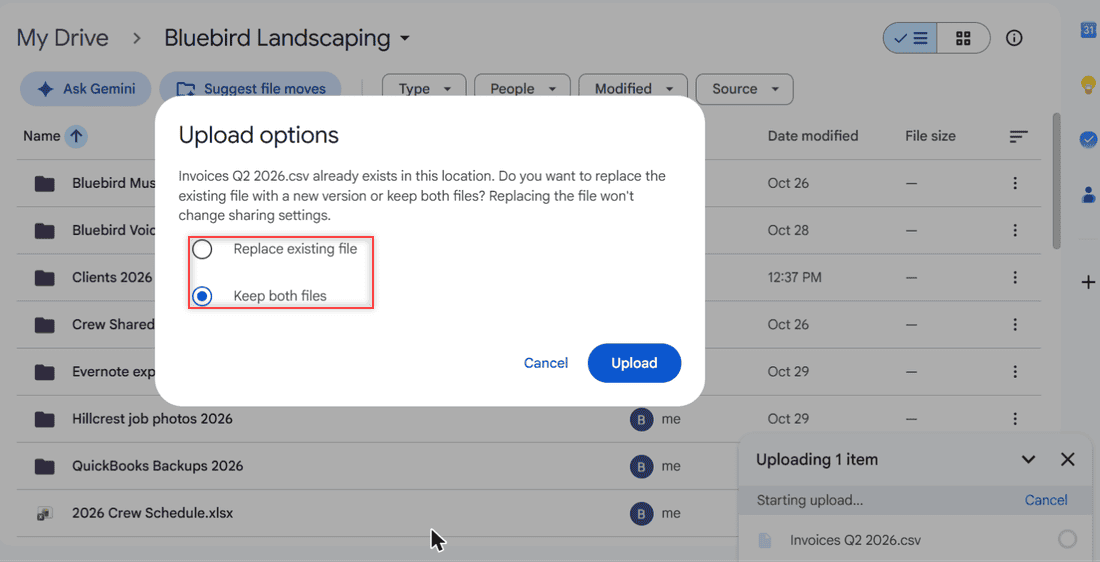
The box offers two choices:
- Replace existing file uploads it as a new version of the file. You still have one file, and sharing settings don’t change.
- Keep both files adds a second file next to the old one. This is the choice that creates duplicates.
Pick Replace existing file and click Upload. In my test, the upload panel showed Version 2 and no new file appeared in the folder.
Keep both is handy only when the two files really are different, like a draft and a final. Otherwise, replace it.
Upload a new version from Manage versions
If you want to update a file on purpose, there’s a cleaner route that never asks about keeping both.
- Right-click the file in Drive.
- Go to File information > Manage versions.
- Click Upload new version and pick the file from your computer.
The file keeps its name, link and sharing. Drive may delete an older version after 30 days or once there are 100 newer ones, unless you choose Keep forever on it. I explain the rest in my Google Drive version history guide.
This only works for files like PDFs, images and CSVs. Google Docs, Sheets and Slides already save every change as you type, so you don’t need to upload copies of them at all.
Find and delete the copies you already have
A duplicate from a web upload is easy to recognize. Drive adds a number in brackets to the name, like (1), and places it right next to the original when you sort by name.
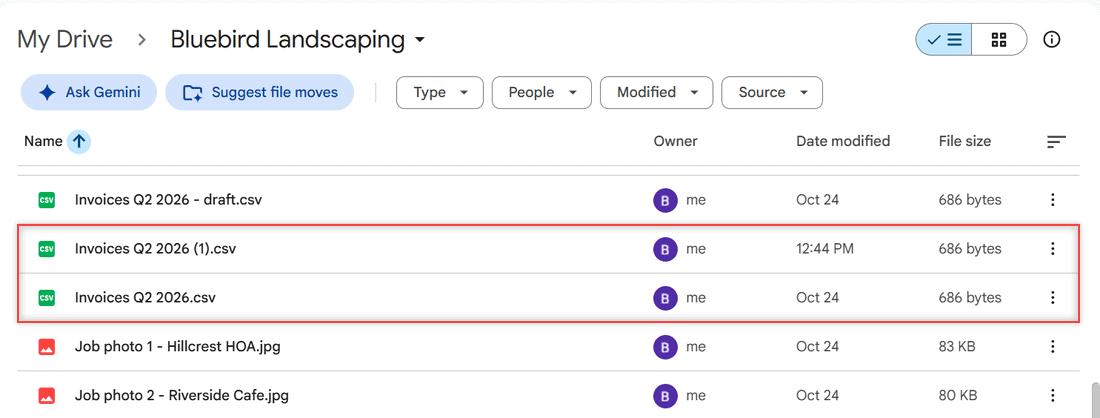
Look at the date and size. Here, the copy was modified at 12:44 PM today, while the original is from Oct 24. Both are 686 bytes, so they’re the same data.
To line up copies in a big folder, switch to list view and click the Name column. My steps to sort files in Google Drive show the other sort options.
You can also type the file name in the Drive search box to see every match across folders.
Once you’re sure which one is extra, right-click it and choose Move to trash. The Delete key does the same thing.
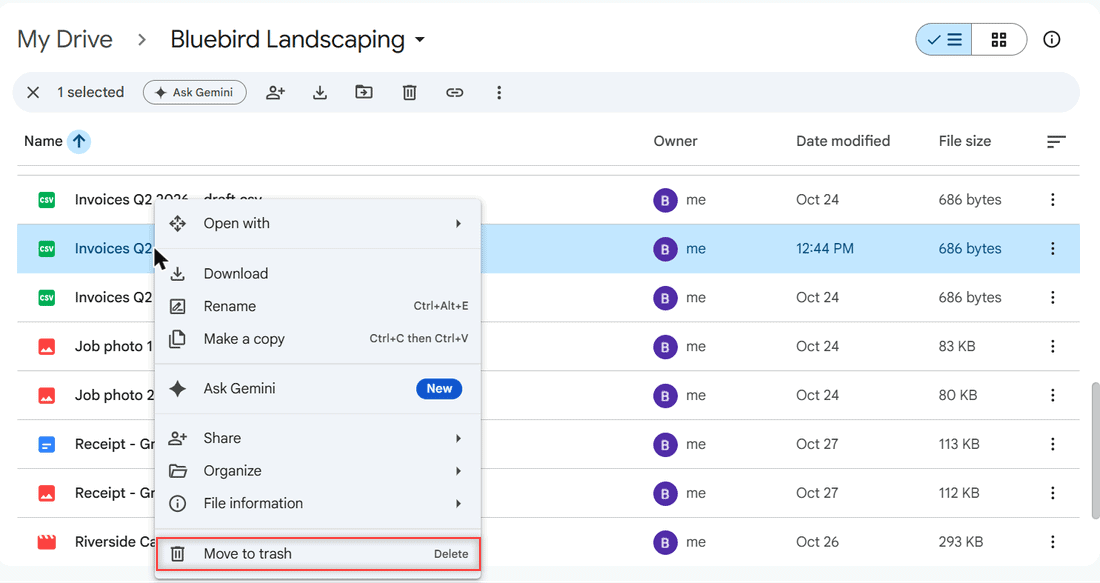
Files stay in Trash for 30 days before Drive deletes them forever, so you have time to undo a mistake. If you need the space back now, empty the trash in Google Drive after you double-check.
Open both files before you trash one. Two files can share a name and still hold different data, especially drafts.
Stop Drive for desktop from making copies
If copies show up without you uploading anything, the cause is usually Drive for desktop. If you don’t have it yet or it’s acting up, start with my guide to install Google Drive on your computer.
First, check how My Drive syncs. Open Drive for desktop, click the gear icon, then Preferences. Click Google Drive (Folders from Drive) on the left.
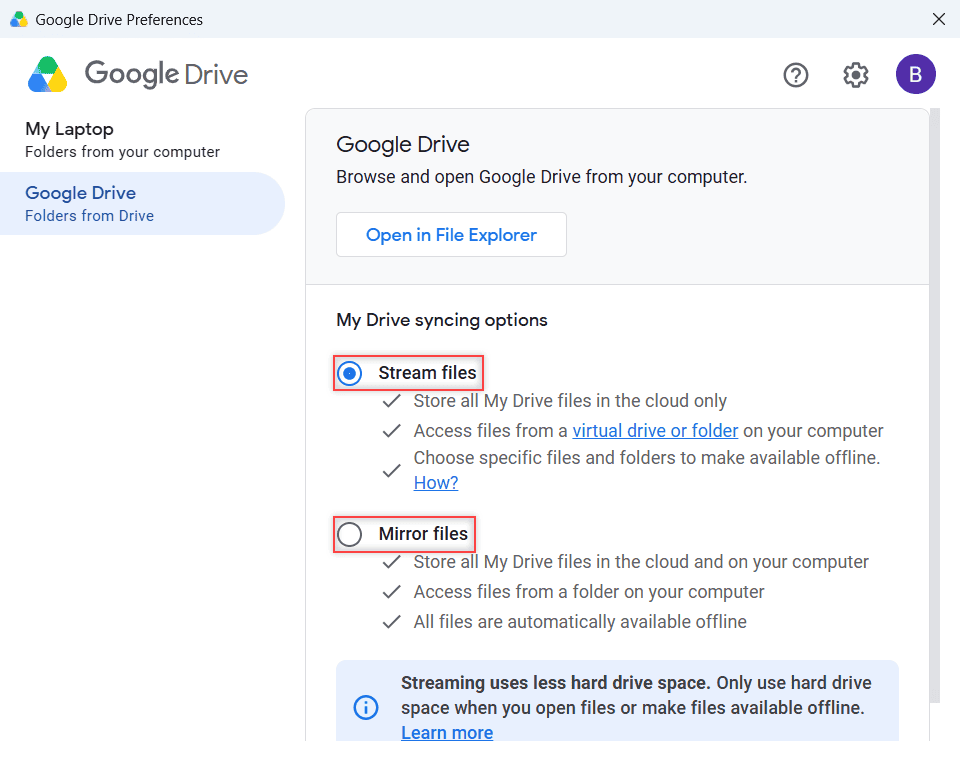
Under My Drive syncing options you’ll see two choices:
- Stream files keeps files in the cloud and downloads them only when you open them.
- Mirror files keeps a full copy on your computer and in the cloud.
Here’s the catch with mirroring. When you switch to it, Google says that if a file’s content differs from the cloud version, Drive for desktop keeps both. That’s where a lot of surprise copies come from.
Conflicts cause copies too. If you edit a file on your computer while someone changes it in the cloud, Drive can’t merge them. It saves a copy with your edits in the original folder.
Some files that can’t sync land in a Lost and Found folder on your hard drive instead. Check it before you delete anything.
To cut down on both, edit shared files in one place, and let sync finish before you switch modes or shut down your computer.
Stop syncing a folder from your computer
Folders you add from your computer, listed under My Laptop (Folders from your computer) in Preferences, always mirror. If you added the same folder on two computers, Drive will hold two sets of the same files.
To unsync a folder from Google Drive:
- Open Drive for desktop and go to Preferences.
- Click your computer’s name on the left (mine says My Laptop).
- Select the folder and uncheck the Drive box. If you also see a Photos box, uncheck that too.
The files already in Drive stay there, and new changes stop syncing. For every option, including turning sync off completely, see my guide on how to turn off Google Drive sync.
Want a short break instead? Click the pause button at the top of the Drive for desktop window.
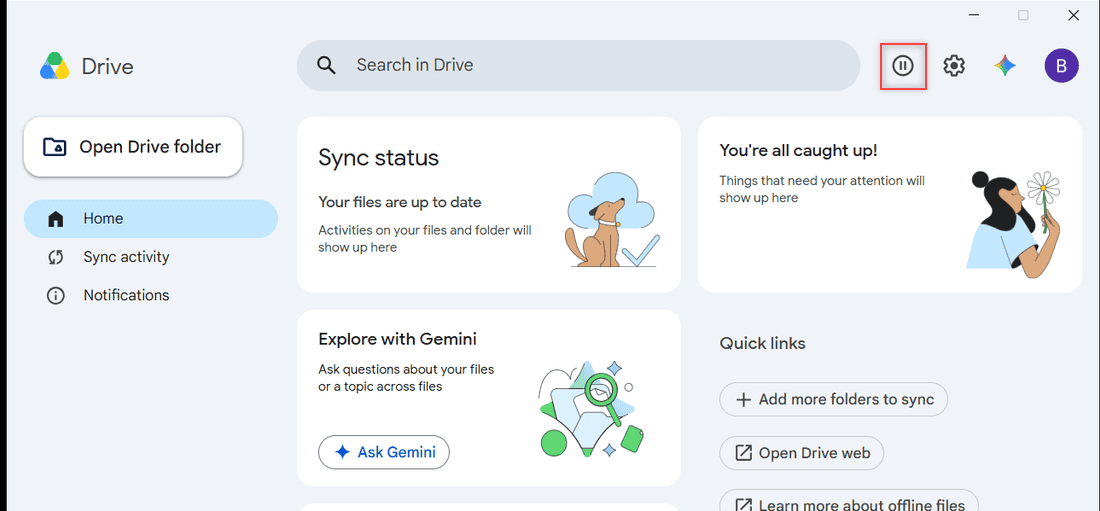
You can also open the menu, then Settings > Pause syncing. Use the same steps and pick Resume syncing when you’re done cleaning up.
One more change worth knowing. Drive for desktop ended Google Photos backup on August 10, 2026, so it no longer sends your photo folders to Photos.
When duplicates keep coming back
If you’ve done all of this and copies still appear, run through this list:
- Don’t upload the same folder from two devices. Pick one computer as the source and let the others stream.
- Pause sync before a big cleanup. That way Drive for desktop isn’t adding files back while you delete them.
- Reinstall Drive for desktop. Download the latest version from the Drive download page and install it over the old one.
- Check who else uploads. In a shared folder, a teammate may be adding their own copy of the same file.
If the app won’t open after a reinstall, my fix for when you can’t launch Drive for desktop walks through it.
On a work or school account, your organization may block Drive for desktop or install it for you. In that case, ask your Google Workspace admin before you reinstall or change sync settings. Personal Gmail accounts can make these changes themselves.
Still low on space after cleaning up? Read my guide on why Google Drive storage looks full with no files.
Here are a few more Drive guides that pair well with this one:
- How long Google Drive keeps deleted files
- How to stop a Google Drive upload
- Find folders in Google Drive
- See a folder size in Google Drive
Once the duplicates have stopped, you’ll still want to clear out the extra copies. Follow my steps to delete files from Google Drive on a computer or phone.
Quick answers
Why is Google Drive duplicating my files?
Usually because you picked Keep both files when uploading a file with the same name, or because Drive for desktop found a sync conflict and saved your edited copy next to the original.
How do I prevent duplicate files in Google Drive?
Choose Replace existing file when Drive asks, or use Manage versions to upload a new version. Also avoid syncing the same folder from more than one computer.
Does replacing a file in Google Drive delete the old one?
No. It becomes an older version you can still open for a while. Google explains the limits in Google Drive Help: Check activity and file versions.
How do I unsync a folder from Google Drive?
Open Drive for desktop, go to Preferences, select the folder under your computer, and uncheck Drive. Files already uploaded stay in Drive.

I am Carissa Gudinoa, a technology buff, and Office online and Apple expert with over 9 years of experience. I am passionate about helping others get the most out of their Apple devices. I have written extensively about Apple products and technologies. I am committed to providing my clients with the best possible service and am always up-to-date on the latest Apple products and features. I also write extensively on other software available for use at minimal cost or free. This includes Word Online, Outlook Online, Excel Online, and other Office online programs… Check out more.