
Pick Google Drive if you already live in Gmail and Google Docs and want the bigger free plan, 15 GB against Dropbox’s 2 GB. Pick Dropbox if you mostly sync ordinary files, like Office documents, CAD drawings, and photos, between computers and don’t need Google Docs at all.
In this tutorial, I’ll compare Google Drive vs Dropbox the way I’d explain it to another small business owner: free storage, paid plans, sharing, version history, offline work, and device limits. I’ll show you real screens from my Drive account and tell you plainly where Dropbox is the better fit.
Two apps that do the same basic job
Both services do the three things most of us need. They sync your files across your computers and phone, they keep a copy online in case a laptop dies, and they let you share a file or folder with a link.
The difference is what each one is built around. Google Drive lives inside your Google Account, next to Gmail, Google Photos, and Docs, Sheets, and Slides. Dropbox is a file sync service first, and it doesn’t care which apps made your files.
At Bluebird Landscaping here in Austin, we run the office on Google Drive. I don’t use a Dropbox account, so every Dropbox point below comes from Dropbox’s own plan and help pages. If you’re also weighing Microsoft’s option, see my Google Drive vs OneDrive comparison.
Google Drive vs Dropbox at a glance
| Feature | Google Drive | Dropbox |
|---|---|---|
| Free storage | Up to 15 GB per Google Account | 2 GB on Dropbox Basic |
| What counts against it | Drive, Gmail, and Google Photos together | Only your Dropbox files |
| Paid upgrade | Google One plans, starting at 100 GB | Plus (2 TB) and higher plans |
| Office apps built in | Google Docs, Sheets, Slides | None of its own |
| Deleted files | Trash keeps them 30 days | 30 days on Basic, Plus, and Family |
| Old versions | 30 days or 100 newer versions, or Keep forever | 30 days on Plus, up to 1 year on Advanced |
| Device limit (free) | No device cap listed | 3 devices on Basic |
| Offline in a browser | Docs, Sheets, Slides with Docs Offline | Desktop app needed |
| Best fit | Gmail and Google Docs users | Teams syncing ordinary files |
Where Google Drive comes out ahead
Much more free space
Google gives every Google Account up to 15 GB at no cost. Dropbox Basic, its free plan, gives you 2 GB. For a small office that just wants somewhere to park price lists and job photos, that gap matters on day one.
My demo account is on a paid 5 TB Google One plan, so its Storage page shows plenty of headroom: 7.52 GB used. The bar is split by service, and the list below it is sorted by size.
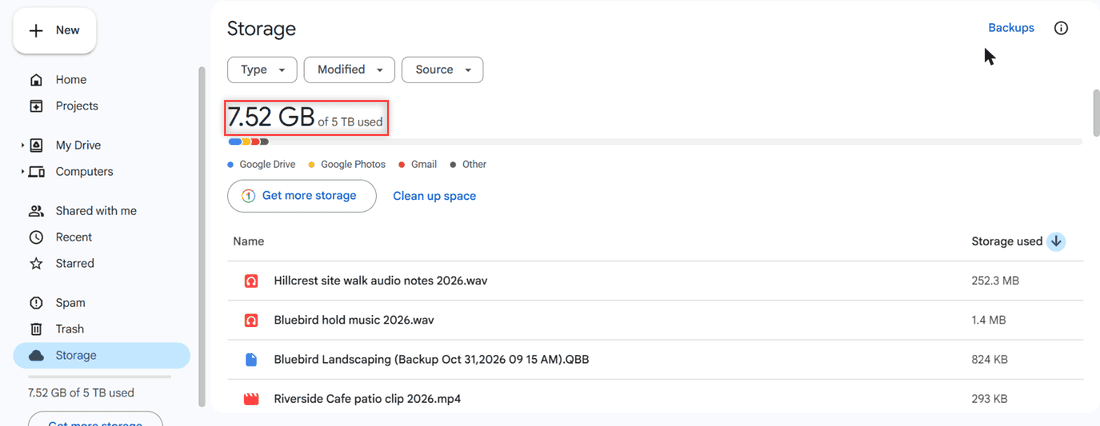
The biggest file is a 252.3 MB audio note from a site walk at Hillcrest. Knowing what’s eating space before you pay for more is worth five minutes; here’s how to see folder size in Google Drive.
Google Docs, Sheets, and Slides come with it
Drive isn’t only storage. You can create a Doc, Sheet, or Slides file right in the browser, and two people can edit the same proposal at once. Dropbox doesn’t include its own office apps, so you’d bring your own.
Drive also opens Word and Excel files you upload. If clients email you Office files all day, my guide to saving Word docs to Google Drive shows the quick way to get them in.
Sharing settings you can see at a glance
Drive’s Share dialog shows who has access and how the link behaves. On a personal account, General access is either Restricted or Anyone with the link. Our spring price list stays Restricted until I add a client by email.
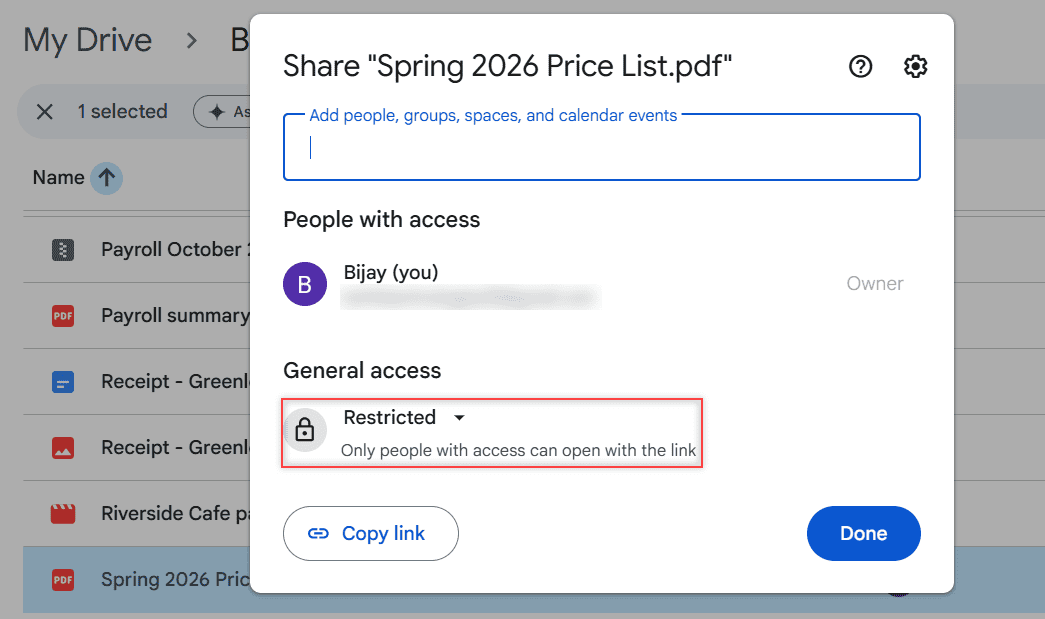
The gear icon adds two more controls: whether editors can change permissions and share, and whether viewers and commenters can download, copy, print, and access the file via Gemini. Workspace admins can also limit sharing outside the company.
If you want a link anyone can open, here’s how to turn on link sharing in Google Drive.
Offline Docs right in the browser
In Chrome or Edge, Drive can keep your recent Docs, Sheets, and Slides files ready to edit offline. You need the Google Docs Offline extension and one checkbox in Drive Settings.
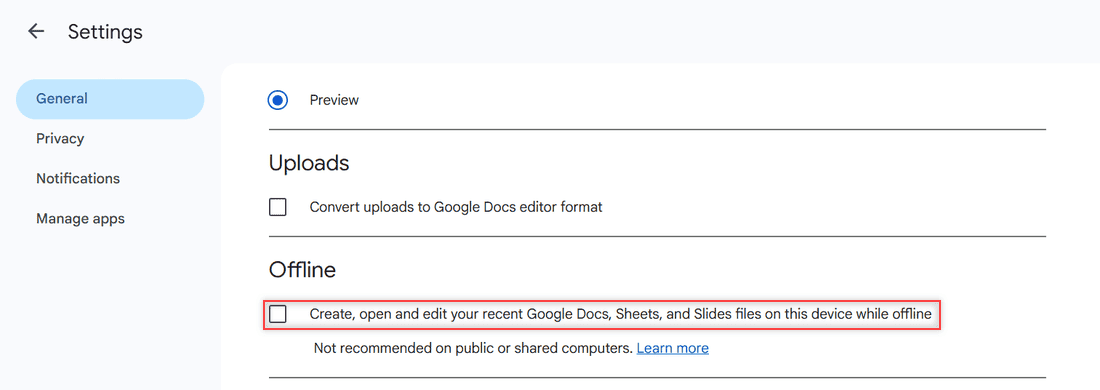
Google warns it’s not recommended on public or shared computers. Drive for desktop covers other file types: mirrored files are always offline, and streamed ones only when marked Available offline. If it acts up, read why Google Drive keeps going offline.
Google Drive drawbacks
That 15 GB is one shared pool. The Google One Storage Manager says it outright: your storage is shared across Google Photos, Drive, Gmail, and more. In my account, Photos takes 7.03 GB of the 7.51 GB used.
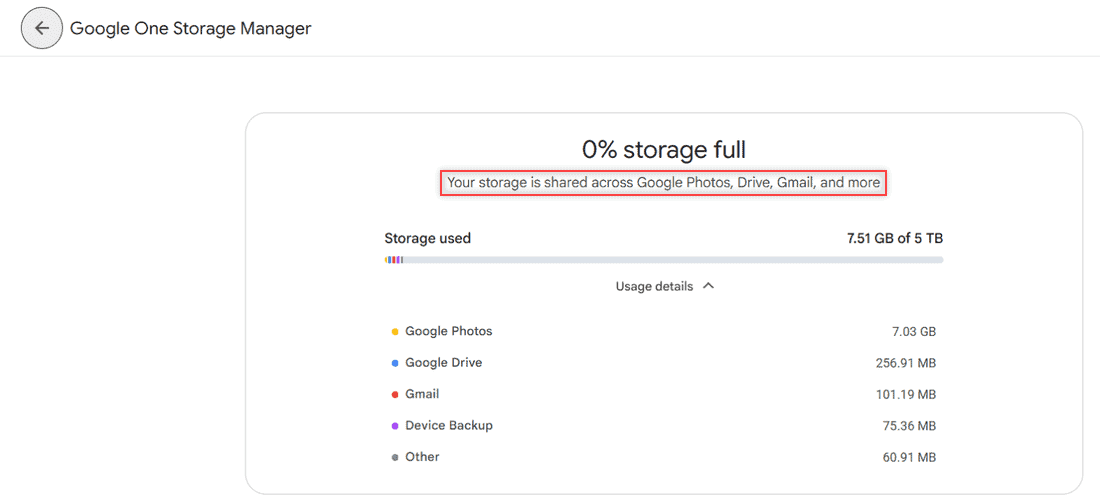
Gmail attachments, Spam and Trash, Photos backups, Android backups, and Drive’s own Trash all count. Go over and you can’t upload to Drive or back up photos, Gmail may stop sending and receiving, and you can’t create new Docs, Sheets, or Slides files.
Personal accounts also miss a few sharing extras. Google lists the “Your organization” link option and expiration dates for Workspace accounts, so a personal Gmail can’t make a share expire on its own.
If Drive says you’re full when your folders look empty, my fix for storage full but no files in Drive shows where the space is hiding.
Where Dropbox comes out ahead
It counts only your files
Dropbox storage holds your Dropbox files and nothing else. Your email and phone photo backups live somewhere else, so a busy inbox can’t block a file upload. If you’re picky about what eats your space, that’s a clean setup.
On Google’s side, copies matter too. A file you copy from a shared folder, or add to someone else’s shared folder, uses your own storage. With Dropbox, there’s no mailbox or photo library quietly growing in the same space, so the number you see is just your files.
Built for syncing ordinary files
Dropbox has long had a reputation for good desktop syncing, and it doesn’t try to turn your files into another format. A Word file, a CAD drawing, and a folder of raw photos all just sync as they are.
Drive can do this too with Drive for desktop. If you go that route, here’s how to install Drive for desktop and pick stream or mirror.
Version history that scales with the plan
Dropbox’s plan page lists 30 days of version history and deleted-file recovery on Plus, 180 days on the Standard team plan, and 1 year on Advanced. Basic, Plus, and Family can restore deleted files from the last 30 days on the Deleted files page at dropbox.com.
Drive handles uploaded files differently. Old versions might be permanently deleted after 30 days or once there are 100 newer versions, unless you mark one Keep forever. Here’s that note in my Manage versions dialog.
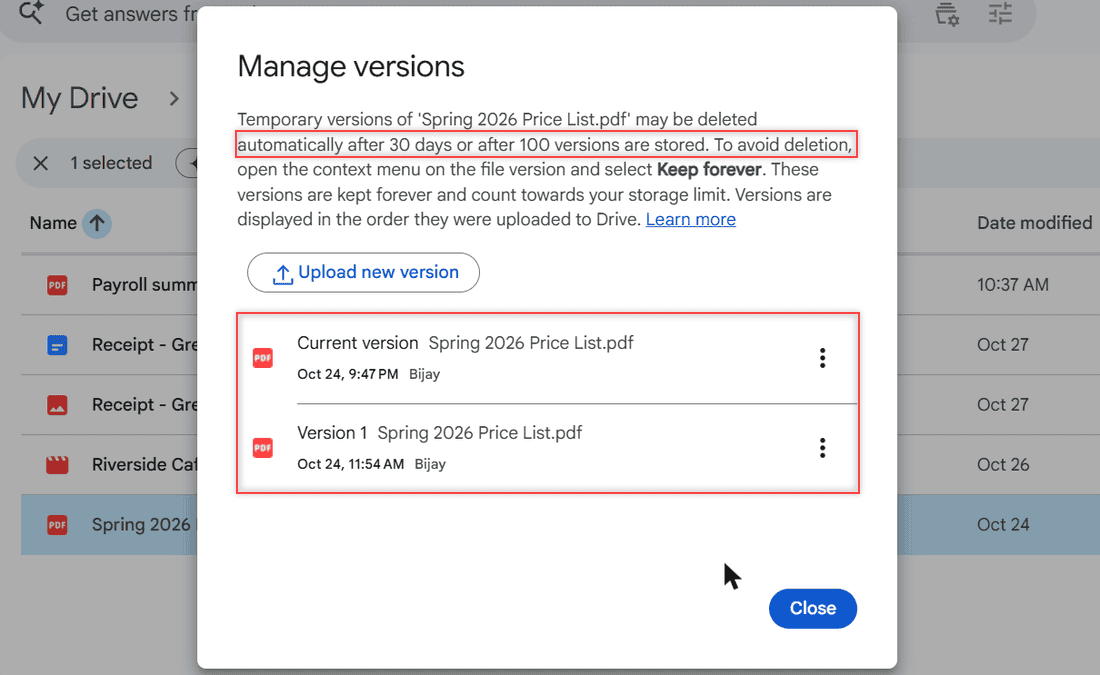
So on Drive, you have to think about it file by file. I go through the whole menu in my guide to Google Drive version history.
Big file transfers on Plus
Dropbox Plus includes 2 TB of storage and Dropbox Transfer for sending files up to 50 GB. That’s useful if you send large video or drawing sets to people who don’t have an account.
Dropbox drawbacks
The free plan is small. Dropbox Basic gives you 2 GB, and Dropbox’s help page says Basic can be signed in on up to three devices at a time. Using dropbox.com in a browser doesn’t count toward that limit.
For a crew that shares one office PC, a laptop, and two phones, that three-device cap on Basic runs out fast. You’d likely end up on a paid plan sooner than you would with Drive.
Plus, Family, Professional, and Essentials have no device cap. And there are no Google Docs-style editors, so live co-editing depends on whatever apps you already pay for.
Storage plans and pricing tiers
I’m not quoting prices. They change and vary by country, so check the current price on each plan page before you buy. Here’s how the tiers line up as of November 2026.
- Google One: paid plans start at 100 GB, with 2 TB and 5 TB tiers above that. The space covers Drive, Gmail, and Photos, and you can share a plan with up to 5 other people.
- Dropbox Plus: 2 TB for one person, with 30-day recovery and 50 GB transfers.
- Dropbox team plans: Standard keeps version history for 180 days and Advanced for 1 year.
Before upgrading either one, check whether you even need to. Files in a folder someone shared with you count against the owner, not you, as I explain in how shared folder space works in Google Drive.
Who should pick Google Drive, and who should pick Dropbox
- Pick Google Drive if you already use Gmail or Google Docs, want 15 GB free, and like editing with your team in the browser.
- Pick Dropbox if you mostly sync Office files, drawings, or photos between computers and don’t need Google Docs.
- Pick Dropbox Plus if you send very large files to people outside your business.
- Use both if a client or architect works in Dropbox but your own office runs on Google.
For Bluebird Landscaping, Drive wins because every crew lead already has a Google Account and our price lists live in Sheets. If you’re still unsure about Google’s side, my list of Google Drive advantages and disadvantages goes deeper.
Comparing other storage services? Start with these:
- Google Drive vs Mega
- Google Drive vs Koofr
- personal vs business Google Drive
- how long Google Drive keeps deleted files
Still deciding?
Is Google Drive or Dropbox better?
Google Drive is better if you use Gmail and Google Docs and want more free space. Dropbox is better if you mostly sync ordinary files between computers and don’t need Google’s office apps.
Is Dropbox safer than Google Drive?
Neither is automatically safer. Both let you control who can open a shared file, and most accidents come from a loose “anyone with the link” share, so check your sharing settings on whichever one you pick.
Which gives more free storage, Google Drive or Dropbox?
Google Drive. A Google Account includes up to 15 GB, but Gmail and Photos share it. Dropbox Basic gives 2 GB. Google explains its limit in Google One Help: how your storage works.
Can I use Google Drive and Dropbox at the same time?
Yes. Both desktop apps can run on the same computer, each syncing its own folder. Just remember each one counts against its own storage, and Dropbox Basic allows three signed-in devices.

I am Carissa Gudinoa, a technology buff, and Office online and Apple expert with over 9 years of experience. I am passionate about helping others get the most out of their Apple devices. I have written extensively about Apple products and technologies. I am committed to providing my clients with the best possible service and am always up-to-date on the latest Apple products and features. I also write extensively on other software available for use at minimal cost or free. This includes Word Online, Outlook Online, Excel Online, and other Office online programs… Check out more.