
How big is that folder, really? It’s a fair question when your storage bar creeps up, and Google Drive doesn’t answer it. On the web, a folder never shows a size, only the files inside it do.
In this tutorial, I’ll show you four ways to see folder size in Google Drive anyway, using my Bluebird Landscaping demo folder, plus what each number actually means for your storage.
Why Google Drive won’t show a folder’s size
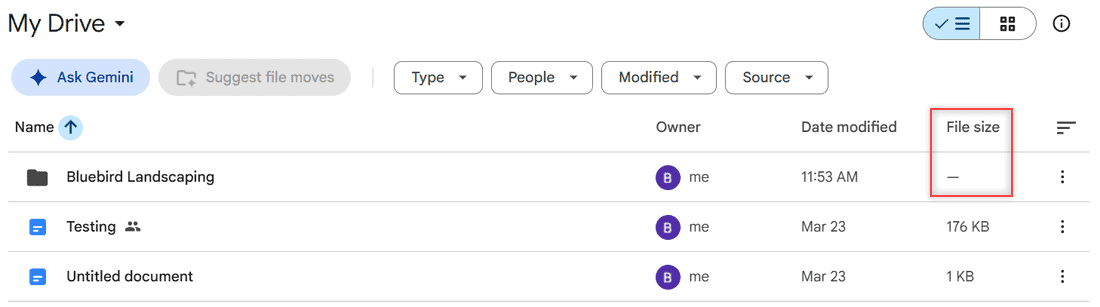
Open My Drive in list view and look at the File size column. Files get a number. Folders get a dash. You can sort files in Google Drive by this column, but folders still won’t show a total.
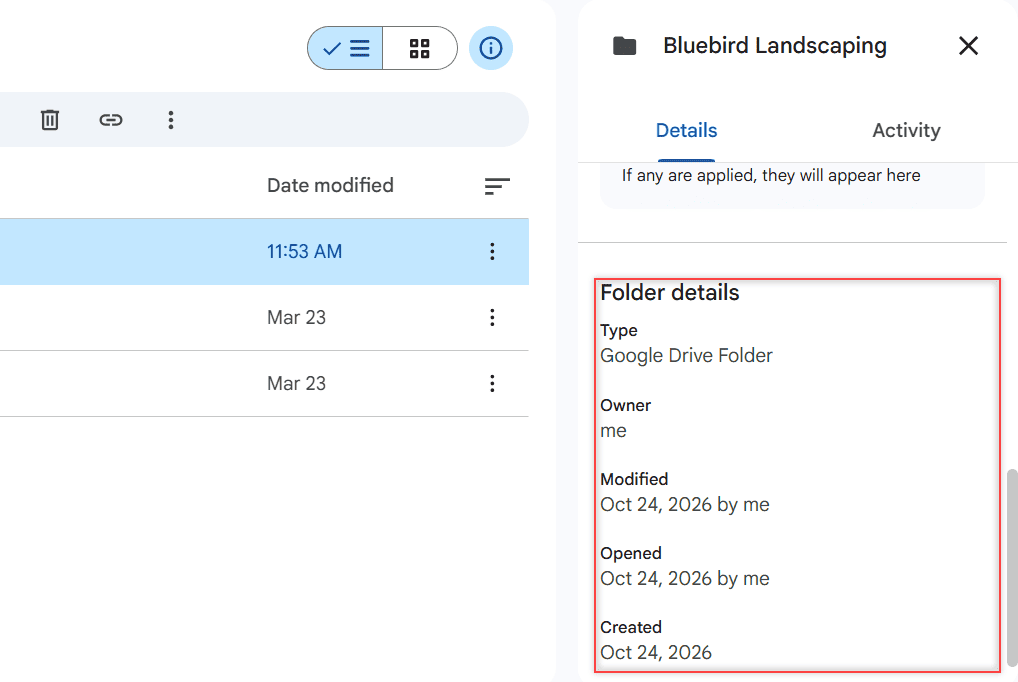
The Details panel doesn’t help either. Open it for the folder, and you get the type, owner, and dates. There’s no size line.
Method 1: Add up the file sizes inside the folder
For a small folder, this is the quickest honest answer.
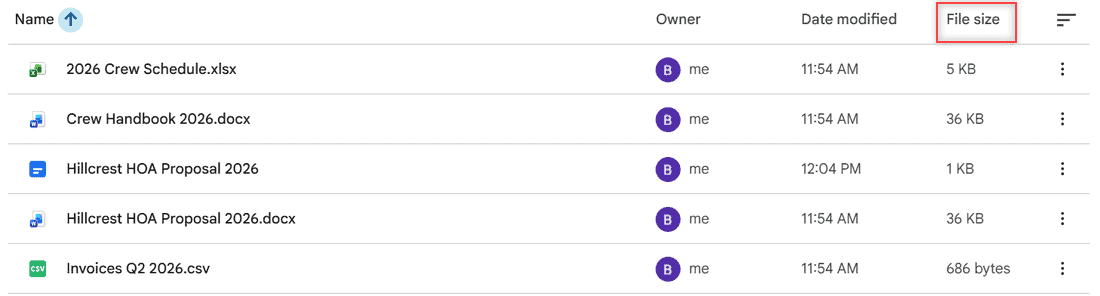
- Open the folder in list view.
- Check the File size column for each file.
- Add the numbers together. Click the column header to put the biggest files on top.
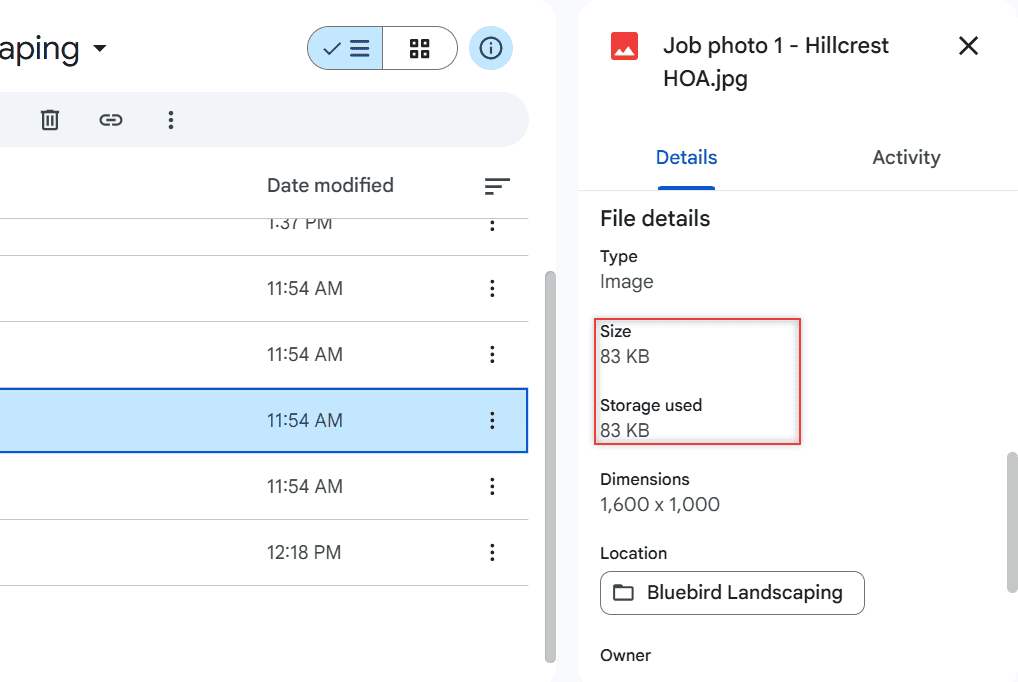
You can also click a single file and open its Details panel. It shows both Size and Storage used.
How does this work?
My folder holds nine files: 5 KB, 36 KB, 1 KB, 36 KB, 686 bytes, 83 KB, 80 KB, 1 KB, and about 4 KB. That adds up to roughly 247 KB, a quarter of a megabyte.
Subfolders show a dash too, so open each one and add its files. If you need to find folders in Google Drive buried deep, search first, then count.
Pro tip: Google Docs, Sheets, and Slides files often show a tiny size, like my 1 KB proposal. The uploaded .docx copy of the same proposal is 36 KB, so Office files and photos usually make up the real total.
Method 2: Find the biggest files on the Storage page
If you’re really asking where your space went, skip the folder math. Click Storage in the left menu, and Drive lists your files from largest to smallest.
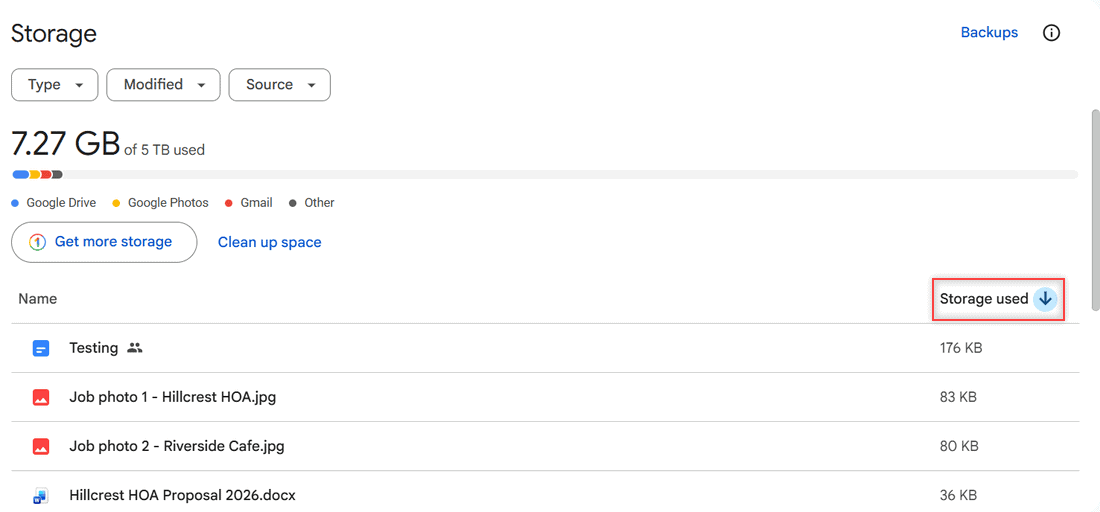
How does this work?
This list covers your whole account, not one folder. My top items were Testing at 176 KB, then the two job photos. It only counts files you own, which is why files shared with you don’t appear here.
The bar at the top includes Gmail and Google Photos too. If it says you’re full but Drive looks empty, my guide on storage that is full with no files walks through the usual causes.
Method 3: Download the folder and check it on your computer
This gives you one number for the whole folder, subfolders included.
- Right-click the folder and choose Download.
- Wait while Drive prepares the download. Big folders take a while.
- On Windows, right-click the downloaded item and choose Properties. On a Mac, choose Get Info.
How does this work?
Your computer measures the files once they’re local. If the download arrives as a compressed file, extract it first, because a compressed file is smaller than the real folder. You can also download files without zipping them if you prefer.
Method 4: Use Google Drive for desktop
Drive for desktop puts My Drive in File Explorer or Finder like any other drive. Right-click a folder there and open Properties or Get Info to see a size.
How does this work?
Treat this number as an estimate. With streaming, files stay in the cloud and use almost no space on your computer, so what File Explorer or Finder reports may not match your Google storage. Mirroring downloads full copies, which is closer, but it fills your hard drive.
Things to keep in mind
- Only files you own count toward your storage. A big folder someone shared with you doesn’t cost you space.
- Free personal accounts get up to 15 GB, shared across Drive, Gmail, and Photos. My demo account is on a paid 5 TB plan, so yours will show a different total.
- On Google Workspace, admins can see which shared drives use the most storage in the Admin console, and can cap how much storage each shared drive uses.
- I don’t recommend third-party folder-size apps. They need access to your whole Drive to scan it.
If your files sit in someone else’s folder, my post on shared folder space in Google Drive explains whose storage they use.
Want to tidy up while you are in there? These help:
Frequently Asked Questions
Why doesn’t Google Drive show folder size?
Drive on the web only shows sizes for individual files. Folders show a dash in the File size column, and the folder Details panel has no size line.
How do I find the biggest folders in Google Drive?
Drive can’t rank folders, but the Storage page lists your files from largest to smallest. Open the big ones to see which folder they live in. Google explains it in Google Drive Help: manage your storage.
Does a shared folder count against my storage?
Only files you own count toward your Google storage. Files someone else owns in a shared folder count against their storage, not yours.
Can I see folder size on the Google Drive app?
Not that I’ve found. The phone app has the same limit as the web, so use a computer with Drive for desktop or a download to get a folder total.
Does Google Drive for desktop show folder size?
Yes, File Explorer Properties or Finder Get Info shows a size for a Drive folder. With streaming, it may not match the storage Google counts, so treat it as an estimate.

I am Carissa Gudinoa, a technology buff, and Office online and Apple expert with over 9 years of experience. I am passionate about helping others get the most out of their Apple devices. I have written extensively about Apple products and technologies. I am committed to providing my clients with the best possible service and am always up-to-date on the latest Apple products and features. I also write extensively on other software available for use at minimal cost or free. This includes Word Online, Outlook Online, Excel Online, and other Office online programs… Check out more.